Regional Variations: Symbolic Languages of Different Berber Tribes
From the minimalist Beni Ourain diamonds to the colorful narratives of Boujaad rugs, explore how different Berber tribes developed unique symbolic languages in their textiles. Discover how geography, local culture, and history shaped distinctive regional styles across Morocco's Atlas Mountains.
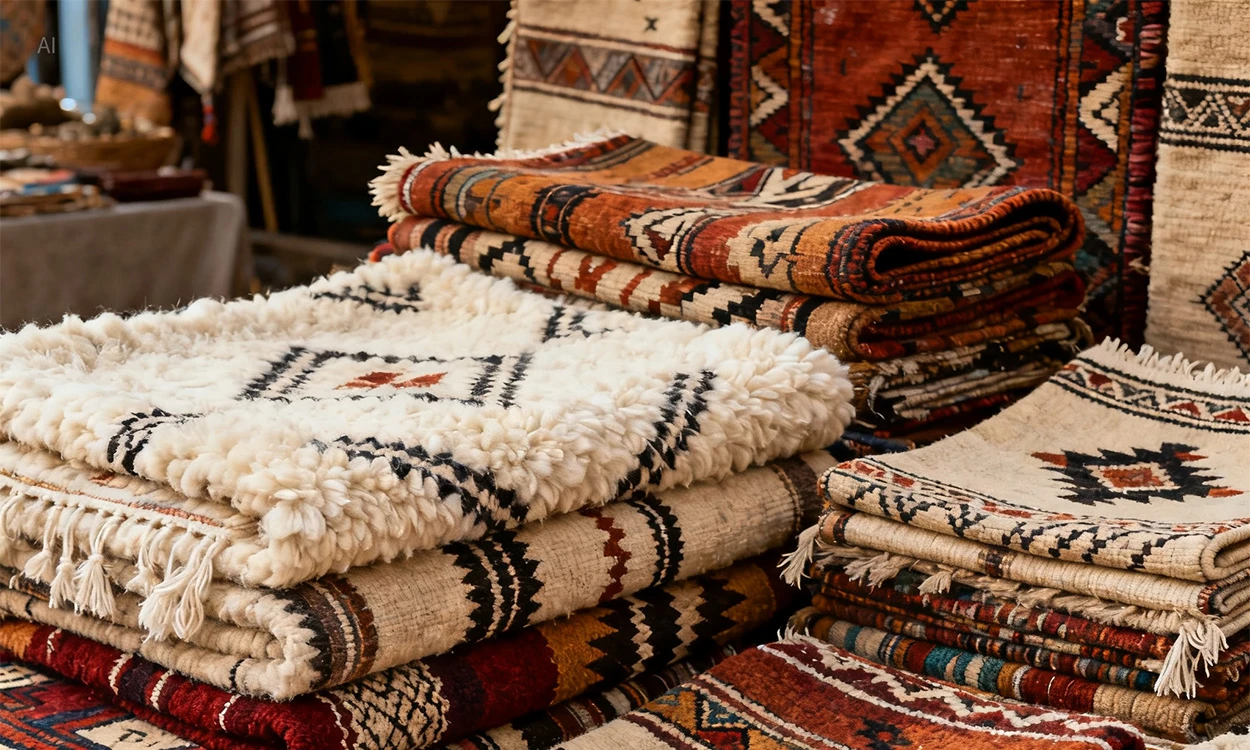
When you look at a traditional Berber rug, where was it made? While sharing core symbolic elements, different Berber tribes throughout Morocco have developed distinctive visual dialects that reflect their specific environments, histories, and cultural traditions. Learning to recognize these regional styles adds a fascinating dimension to appreciating these cultural treasures.
These regional differences aren't merely aesthetic—they reflect the deep connection between Berber weaving traditions and the specific landscapes, cultural histories, and ways of life in different parts of the Atlas Mountains and beyond.
Beni Ourain Symbolism: The Minimalist Storytellers
The renowned rugs of the Beni Ourain confederation from the northeastern Middle Atlas mountains are among Morocco's most recognizable textile traditions. These rugs feature minimalist designs on undyed cream backgrounds that have made them favorites in contemporary interior design worldwide.
Beni Ourain symbolic language tends toward abstraction and spaciousness, with diamonds, lines, and small geometric forms arranged in asymmetrical compositions that often document specific life events or tell personal stories.
A classic Beni Ourain might contain a "narrative line" reading from one end to the other, with symbols representing birth, marriage, childbearing, and other significant life transitions. The seemingly random placement of small motifs often follows a deeply personal logic, with spacing and arrangement as meaningful as the symbols themselves.
These rugs typically use a limited palette—primarily natural undyed wool with black or dark brown geometric patterns—allowing the symbolic elements to stand out clearly against the neutral background.
Azilal Symbolism: Colorful Mountain Stories
From the central High Atlas, Azilal rugs feature more colorful and densely packed symbols, often combining abstract geometric forms with stylized representations of everyday objects and experiences. These rugs frequently incorporate symbols related to the natural environment—mountains, stars, plants, and weather patterns—reflecting the close connection between these communities and their mountainous homeland.
Azilal weavers often use staggered repetition of motifs to create rhythmic patterns that can represent the passage of time, seasons, or repeated practices like planting and harvesting. The introduction of new colors or a sudden change in pattern might mark significant events or transitions in the weaver's life.
Unlike the restrained palette of Beni Ourain rugs, Azilal pieces often incorporate vibrant colors—reds, yellows, blues, and greens—derived from natural dyes. These colors add another dimension to the symbolic language, with specific hues carrying their own meanings within the cultural context.
Boujaad Symbolism: The Colorful Narratives
The distinctive pink and red hues of Boujaad rugs from the central plains region provide the backdrop for some of the most elaborate symbolic compositions. These rugs often feature complex arrangements of diamonds, triangles, and X forms that create visual narratives across the entire surface.
Boujaad weavers frequently incorporate symbols of transition and journey, reflecting the historical trade connections of their region. Their compositions tend to be more structured than those of other regions, sometimes featuring clearly defined sections that represent different aspects of experience or different periods in the weaver's life.
The bold use of color is a hallmark of the Boujaad tradition, with rich reds, pinks, and oranges creating an emotional impact that complements the symbolic narrative. These warm tones are often achieved through natural dyes derived from madder root and other local plants.
Boujad vs. Beni Ourain: Contrasting Symbolic Approaches
Comparing these two prominent traditions reveals fascinating contrasts in how Berber symbolism adapts to different cultural contexts:
- Color Use: Beni Ourain rugs rely on stark contrast between undyed wool and dark symbols, while Boujad rugs embrace a rich palette of reds, pinks, and oranges.
- Density: Beni Ourain designs embrace negative space, allowing symbols to stand alone, while Boujad compositions often fill the entire surface with interconnected motifs.
- Structure: Beni Ourain arrangements often appear free-form to untrained eyes, while Boujad designs frequently feature more visibly organized sections and borders.
Identifying Regional Origins
Learning to recognize these regional variations adds another dimension to appreciating Berber textiles. Key identifying features include:
- Color Palette: The colors used often provide immediate clues to regional origin.
- Knot Density: Different regions have characteristic knot densities, with some producing finer, more detailed work than others.
- Pile Height: High Atlas rugs often feature longer pile for warmth, while those from warmer regions may have shorter pile.
- Signature Motifs: Certain symbols appear more frequently in specific regions, reflecting local cultural emphasis.
Understanding these regional variations helps us appreciate how Berber symbolic language isn't monolithic but represents diverse traditions united by shared cultural foundations yet uniquely adapted to specific environments and historical experiences across the Atlas Mountains and beyond.